
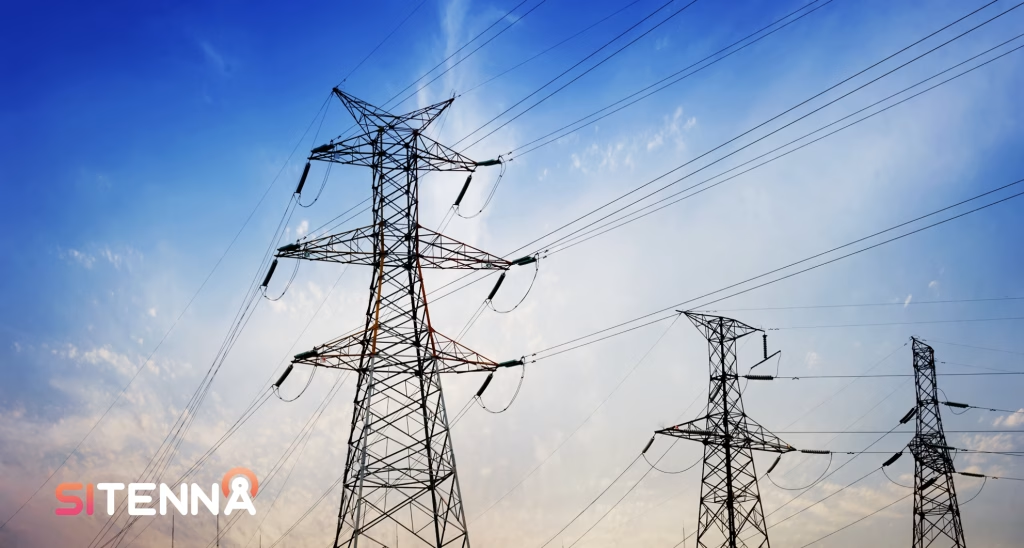
The grid is changing faster than at any point in its history.
Electric vehicles are adding new demand curves. Distributed energy resources are pushing power back into the system. Battery storage is smoothing peaks and valleys. Private LTE networks are digitising field operations.
Utilities are no longer managing a one-way flow of electricity. They’re orchestrating a dynamic, decentralised ecosystem.
And yet, many are still trying to run that system with fragmented data and legacy workflows.
The Grid Is Becoming Distributed. Utility Operations Must Too.
For decades, utilities operated in a predictable model – central generation, linear distribution, scheduled maintenance, structured expansion.
That model no longer holds.
Today’s utility environment includes:
- Thousands of distributed energy assets
- Complex interconnection workflows
- Expanding EV charging networks
- Grid resilience upgrades
- Regulatory reporting pressure
- Cross-functional coordination across engineering, legal, field ops, and finance
The physical infrastructure is evolving. But the digital infrastructure often isn’t keeping pace.

Fragmentation Is the New Risk
When asset data, site documentation, contracts, and maintenance records live in separate systems, visibility disappears. Teams spend time reconciling information instead of acting on it.
The consequences are real:
- Slower project delivery
- Delayed interconnections
- Reactive maintenance instead of predictive planning
- Compliance risk from incomplete records
- Capital tied up in stalled initiatives
In a decentralised grid, coordination is no longer optional. It is operationally critical.
Utilities Need an Operating System for Infrastructure
To manage modern grid complexity, utilities need more than software modules bolted together. They need a unified, asset-centric system that connects:
- Site acquisition and grid upgrades
- Project delivery and contractor collaboration
- Lease and land agreements
- Maintenance schedules and compliance documentation
- Performance visibility across portfolios
When every asset becomes a living data object – linked to contracts, communications, and workflows – utilities move from reactive management to strategic orchestration.
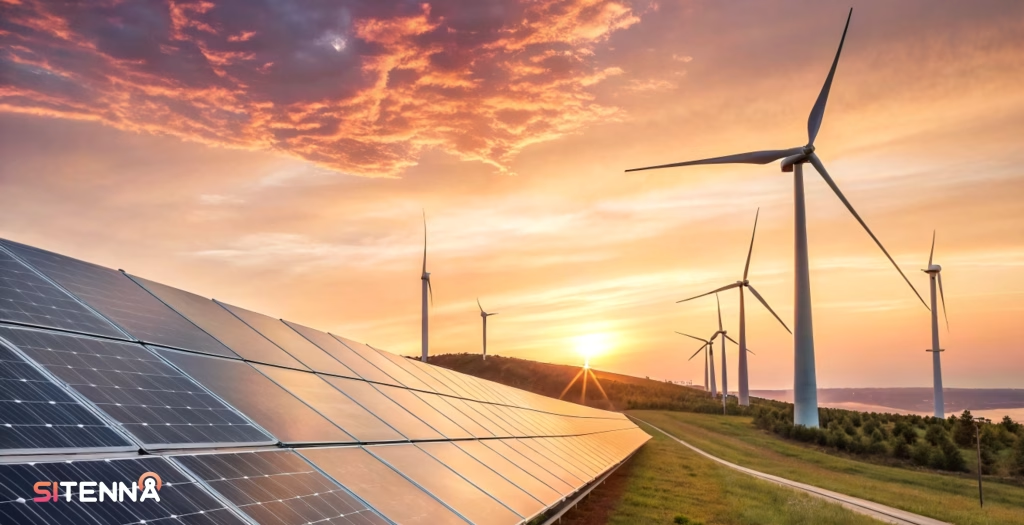
Building a Future-Ready Grid Requires Digital Foundations
Grid resilience, EV integration, DER growth, and decarbonisation targets all rely on one underlying capability: clarity.
Clarity on where assets are. Clarity on who owns what. Clarity on project status. Clarity on risk. Clarity on performance.
The future-ready utility is not just modernising substations and deploying smart meters. It is modernising how infrastructure is coordinated, delivered, and managed.
Because in the next decade, the most powerful utility won’t just move electricity efficiently.
It will move information flawlessly.
About Sitenna
Sitenna is the intelligent operations platform built to eliminate blind spots across modern infrastructure. By centralizing fragmented asset data and automating workflows from site acquisition through execution and management, Sitenna delivers the real-time visibility and control needed to keep projects on track. With Sitenna, infrastructure teams move faster, collaborate smarter, and scale confidently – turning complexity into clarity at every stage.
Contact us at sales@sitenna.com