

Strategic Priorities, Performance Metrics, and How to Build Momentum from Day One
2025 was the year infrastructure leaders woke up to one truth: digital execution is no longer optional – it’s the lever for scale, speed, and resilience. As we head into 2026, that reality only sharpens.
Whether you’re rolling out private broadband, upgrading grid infrastructure, or deploying smart city tech, the path forward demands more than ambition. It demands orchestration – across assets, contracts, people, and timelines.
This is your Digital Infrastructure Playbook – a strategic guide to where to focus, what to measure, and how to move faster from day one.
Priority 1: Collapse the Distance Between Strategy and Execution
Planning and doing must now operate as one. The old model – vision in one system, delivery in another – leads to silos, slippage, and misalignment.
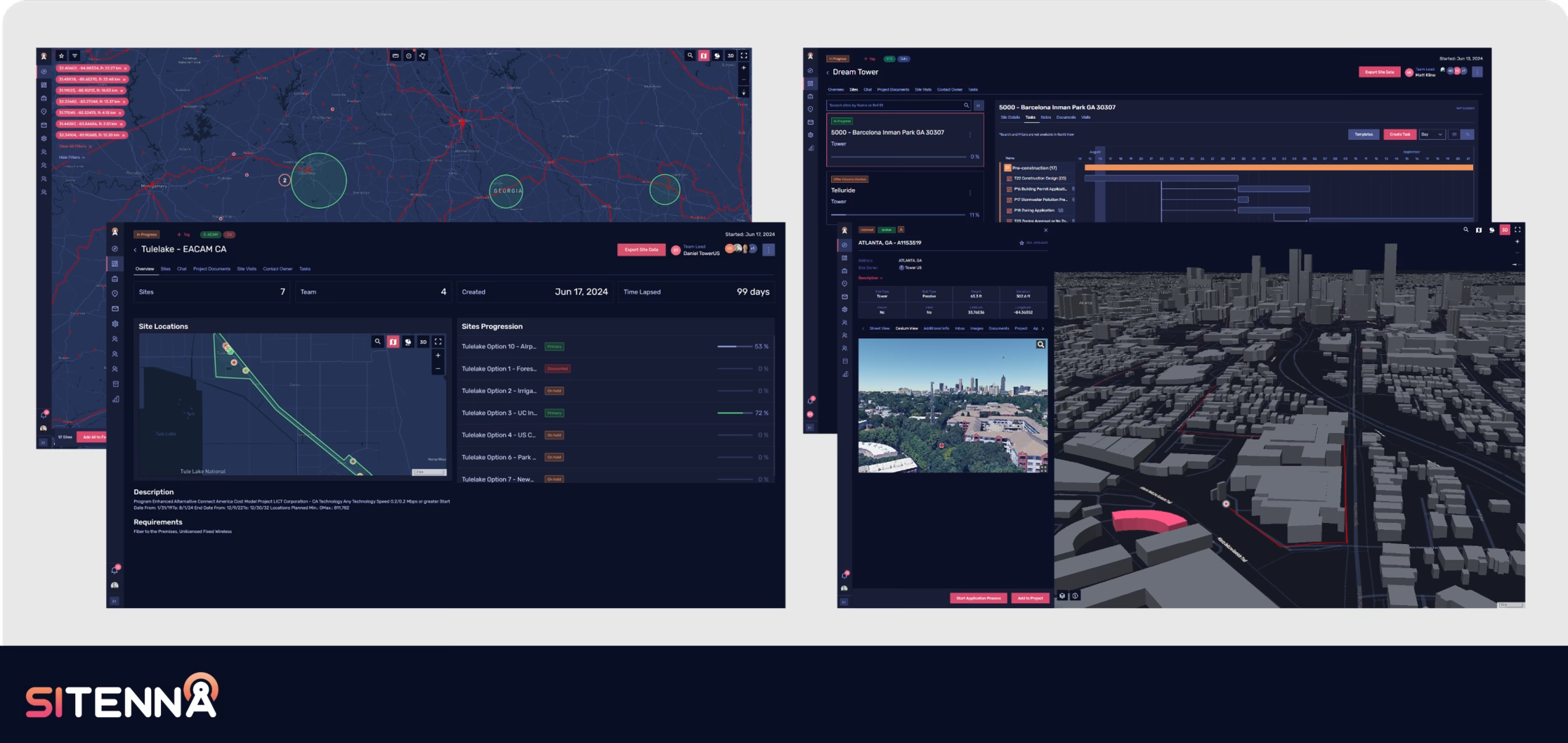
Action: Invest in platforms that connect asset data, project timelines, contracts, and communications in a single system. Look for unified workflows, not point solutions.
Key KPI:
- Time from site identification to first shovel
- % of sites delayed due to missing data or approvals
Priority 2: Operationalize Real-Time Intelligence
Most infrastructure teams aren’t short on data – they’re short on clarity. Teams need tools that turn static spreadsheets into live, decision-ready insights.
Action: Shift from fragmented reporting to real-time dashboards that show portfolio health, project risk, and contract status at a glance.
Key KPI:
- Time to detect and act on project risk
- Number of decision-makers with real-time visibility
Priority 3: Standardize to Scale
Bespoke processes don’t scale. As portfolios grow, repeatable, automated workflows become your infrastructure growth engine.
Action: Identify your most time-consuming, error-prone tasks – and automate them. From contracting to lease approvals to project tracking, look for systems with baked-in best practices.
Key KPI:
- Time saved through automation
- % of workflows completed without manual intervention
Priority 4: Make Collaboration Frictionless
As me move into 2026, multi-stakeholder execution will become the norm. The players may change – internal teams, external partners, regulators – but the need for shared visibility and communication doesn’t.
Action: Choose tools where every stakeholder can work from the same version of reality – where updates, files, messages, and approvals are tied to the asset, not the inbox.
Key KPI:
- Number of communication handoffs per project
- % of stakeholder feedback loops completed on time
Priority 5: Align Execution with ROI
Faster execution isn’t just operationally valuable – it’s financially critical. In 2026, the winners will be those who translate faster deployment into faster revenue realization.
Action: Track execution metrics alongside commercial outcomes. How long from site control to revenue? How quickly can interest be converted to lease?
Key KPI:
- Time to revenue
- Lead-to-lease conversion time
Final Thought: Execution is the Edge
If there’s one takeaway as we close in on 2026, it’s this: the edge in infrastructure isn’t just technological – it’s operational.
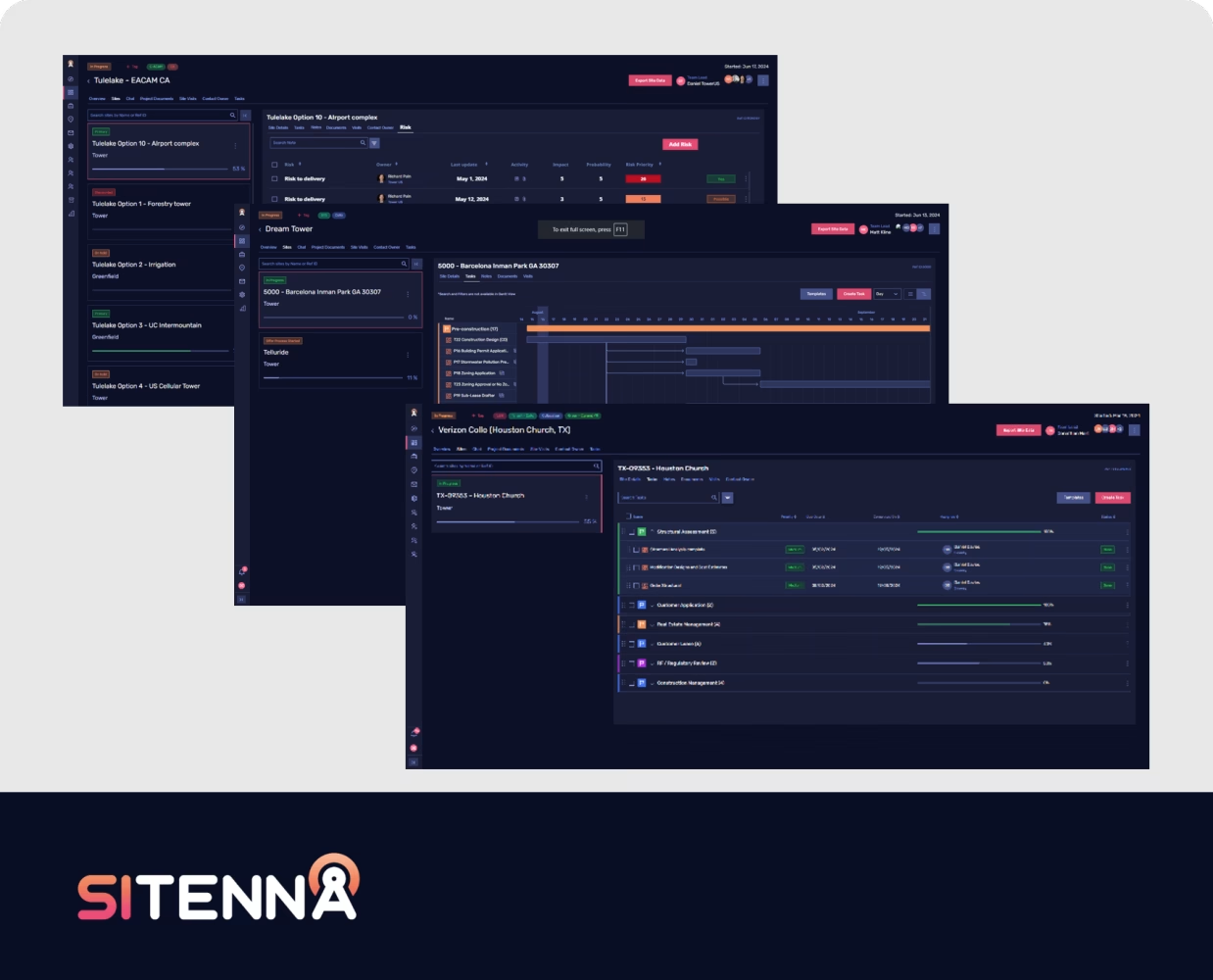
At Sitenna, we help infrastructure operators unify fragmented systems, speed up decision-making, and bring discipline to every stage of rollout – from site to signature to scale.
Let’s build faster, together.
About Sitenna
Sitenna is the intelligent operations platform built to eliminate blind spots across modern infrastructure. By centralizing fragmented asset data and automating workflows from site acquisition through execution and management, Sitenna delivers the real-time visibility and control needed to keep projects on track. With Sitenna, infrastructure teams move faster, collaborate smarter, and scale confidently – turning complexity into clarity at every stage.
Contact us at sales@sitenna.com