
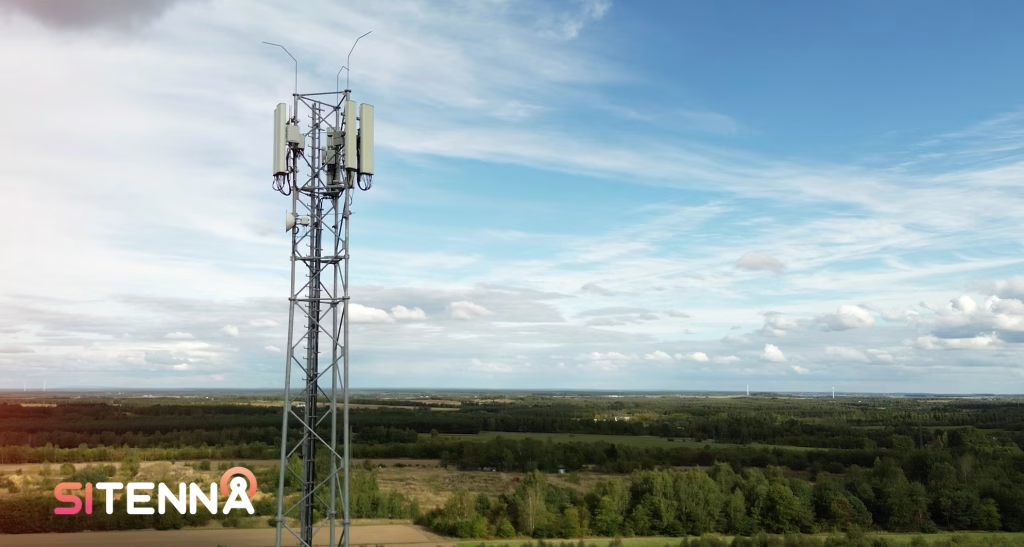
As utilities push forward with private LTE (PLTE) deployments, one trend is becoming increasingly clear: the winners are mastering PLTE rollout compression – they aren’t just building, they’re building fast.
As a result, what used to take 12 to 18 months is now expected in 6. In today’s environment of rising demand, grid modernization mandates, and evolving risk, speed has become a competitive necessity, not just a project metric.
For instance, at this year’s UBBA sessions, deployment veterans offered hard-earned insights into how utilities are compressing timelines without cutting corners. From smaller players to national integrators, one theme resonated: faster deployments come from smarter processes, not faster labor.
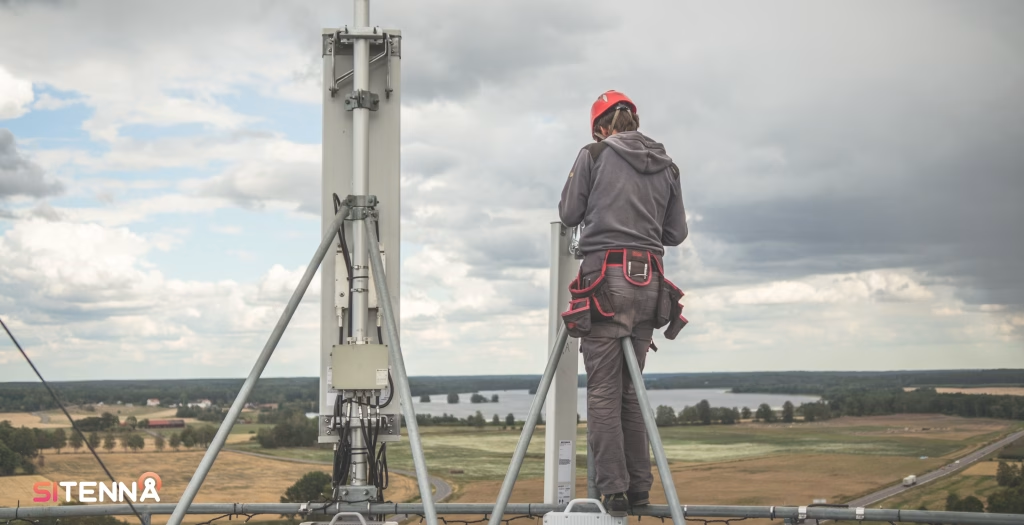
The New Rules of Deployment Speed
Specifically, what does it take to move faster without slipping up? Leaders are rethinking every layer of deployment to improve cycle time, reduce rework, and increase “first-time-right” outcomes.
Here’s what’s working:
- Front-load site data and decisions
- The most successful deployments don’t stumble over unknowns. They build intelligence – zoning, permitting, structural – into site selection, not site correction.
- Design for replication, not reinvention
- Field-friendly hardware, standardized playbooks, and consistent permitting packages turn deployments into scalable systems, not one-off construction jobs.
- Move in parallel, not in sequence
- Teams that build momentum keep multiple workflows running at once – real estate, RF engineering, legal – instead of waiting for one to end before the next begins.
- Centralize your view
- When critical data lives in spreadsheets, inboxes, or siloed systems, friction is inevitable. Clarity and coordination across internal teams and external partners are prerequisites for speed.
Are you attending the upcoming UBBA Summit & Plugfest 2025 in Charlotte, NC?
We will be at booth #32 in the Innovation Zone and we are proudly hosting a Tuesday Tech Talk ‘Blueprint to Network: Lighting Up the Grid with PLTE and Edge’ at 2:45 to 3:45 on 11/4/25.
Digital Infrastructure as a Strategic Lever
Indeed, the lesson from those who’ve done this at scale is simple: you can’t out-hustle disorganization. Speed comes from systematization. And that doesn’t happen by accident.
Furthermore, digital platforms are no longer just support tools. They’re becoming strategic infrastructure in their own right. The ability to coordinate dozens of site builds, contractors, assets, and approvals in real time isn’t just an operational win – it’s essential to meeting modernization goals and delivering critical connectivity where and when it’s needed.
Moreover, by embedding workflows, automating communication, and surfacing real-time status updates – enabling PLTE rollout compression at scale, software tools are enabling teams to spend less time chasing information and more time moving projects forward.

Moving at Grid Speed
Therefore, PLTE rollout compression has changed the game for utility communications, offering new levels of control, reliability, and resilience. But unlocking those benefits at scale requires more than spectrum and equipment – it requires operational intelligence.
Ultimately, whether you’re in the middle of a pilot or preparing for a state-wide rollout, one thing is clear: with Sitenna, Smarter sites lead to faster networks. And faster networks are what the grid needs now.
About Sitenna
Sitenna is the intelligent operations platform built to eliminate blind spots across modern infrastructure. By centralizing fragmented asset data and automating workflows from site acquisition through execution and management, Sitenna delivers the real-time visibility and control needed to keep projects on track. With Sitenna, infrastructure teams move faster, collaborate smarter, and scale confidently – turning complexity into clarity at every stage.
Contact us at sales@sitenna.com