

For years, EV charging was treated as a compliance measure. A sustainability upgrade. A branding signal.
That framing is outdated.
EV infrastructure has crossed a threshold. It is no longer an amenity – it is an income-generating, infrastructure-grade asset class. And like any asset class, it demands discipline, visibility, and portfolio strategy.
Phase One Was Deployment, Phase Two Is Performance.
The first wave of EV charging was about speed and coverage.
Secure sites > Install hardware > Build network density > Prove demand.
Now the market is shifting. The questions are more sophisticated:
- Which locations are driving sustained utilisation?
- How are lease structures impacting long-term margins?
- Where should capacity be expanded?
- Which sites justify battery integration or grid upgrades?
- How do you benchmark performance across regions?
This is no longer a rollout challenge. It is a portfolio optimisation challenge.
Operators who continue to manage EV sites as individual projects will struggle to scale efficiently. The winners will be those who treat every charger location as a data-rich asset – connected to contracts, performance metrics, land agreements, and long-term revenue strategy.
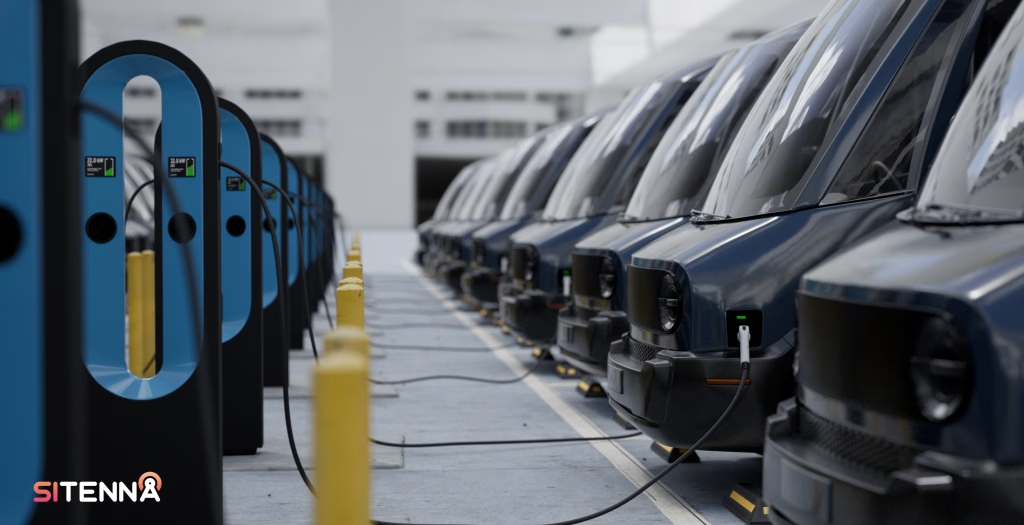
Investors See What’s Happening
Infrastructure funds, utilities, and private equity are no longer asking how many chargers you have installed.
They’re asking:
- What’s the utilisation curve?
- What’s the blended lease profile?
- What’s the risk exposure across your portfolio?
- Where is upside concentrated?
- How scalable is your operating model?
Without structured asset intelligence, these answers are difficult to produce. And when visibility is weak, valuation suffers.
In infrastructure markets, transparency drives confidence. Confidence drives capital.
A New Reality for Commercial Real Estate Owners
For commercial real estate owners, this shift is even more significant.
Every retail park, logistics hub, office campus, and mixed-use development is becoming a potential energy node.
EV charging can:
- Increase footfall and dwell time
- Attract premium tenants
- Unlock new revenue streams
- Enhance asset attractiveness to institutional buyers
- Future-proof properties against evolving tenant expectations
But here’s the challenge – most CRE portfolios were never built to manage infrastructure assets alongside traditional leases. If EV charging agreements, revenue share models, grid upgrades, and maintenance obligations are tracked separately from core property data, complexity multiplies.
Forward-thinking landlords are beginning to treat EV charging not as a bolt-on feature, but as an integrated component of asset strategy – managed with the same discipline as anchor tenants and long-term leases.
Those who do this well will see infrastructure elevate property value. Those who do not risk operational friction and missed opportunity.

The Shift From Installations to Intelligence
In the early stage of any infrastructure cycle, speed wins. In the mature stage, intelligence wins.
EV charging is entering its mature stage. Growth will continue – but margin, optimisation, and strategic coordination will determine who leads the market.
This is no longer just about how fast you install, it’s about how intelligently you manage.
EV charging infrastructure is moving from installation to intelligence.
The leaders will move with it.
About Sitenna
Sitenna is the intelligent operations platform built to eliminate blind spots across modern infrastructure. By centralizing fragmented asset data and automating workflows from site acquisition through execution and management, Sitenna delivers the real-time visibility and control needed to keep projects on track. With Sitenna, infrastructure teams move faster, collaborate smarter, and scale confidently – turning complexity into clarity at every stage.
Contact us at sales@sitenna.com